
On this page
▾


Good software doesn't just appear out of thin air. Willem knows that better than anyone. As a functional analyst at Profility, he's responsible for designing, building, and delivering the right solution for every client. In this post, Willem shows you what a typical workday looks like.
The functional analyst as team lead
Willem's day always starts the same way: getting ready for the daily scrum. In that meeting, the team circles back to what was agreed the day before. Did everyone do what they said they'd do? Did any unexpected hiccups come up, and where is development of the new software still running behind? During the daily meeting, Willem tries to get answers to as many of those questions as he can. He runs the meeting, so he can give every team member a turn, check that everything is on track, and keep things short and efficient.

The functional analyst as planner
After the daily scrum, Willem knows what the goals for the day are. He reviews the sprint plan and adjusts it where needed. Next on the agenda: a meeting with a client. The client expects a status update from their functional analyst and would like to see a first demo. Willem also walks them through the plan for the next sprint. And the session with the client is a good moment for Willem to check for himself that the developers built everything as expected.
The functional analyst as gatekeeper
After the client meeting, Willem takes some quiet time to go through the project backlog. He checks what still needs to be worked out and uses the wiki tool Confluence to document the business processes the client asked for.

With this tool, Willem can also quickly help the client understand how a particular flow will work in the apps we build. On top of that, Confluence makes it easy for the whole team to collaborate on an app.
The functional analyst as a guide for prospects
After lunch, a new challenge is already waiting for Willem. He sits down with a potential client who wants to rework some of their business processes so they run more smoothly. It's the perfect chance for Willem to put his knowledge and experience to work and give the client advice that actually helps.
After a quick look at the sprint plan, Willem heads home with peace of mind. He knows the project is on schedule and within budget. Very soon, the client will be able to start using their new software. As for Willem, he's already looking forward to the next project he can sink his teeth into as a functional analyst.
Would you like to play a key role, just like Willem, in a dynamic company that changes the way businesses work with challenging software projects? Take a look at our job openings.
Keep reading
CRM AND ERP
A CRM alongside your ERP: why you don't have to keep track of anything twice
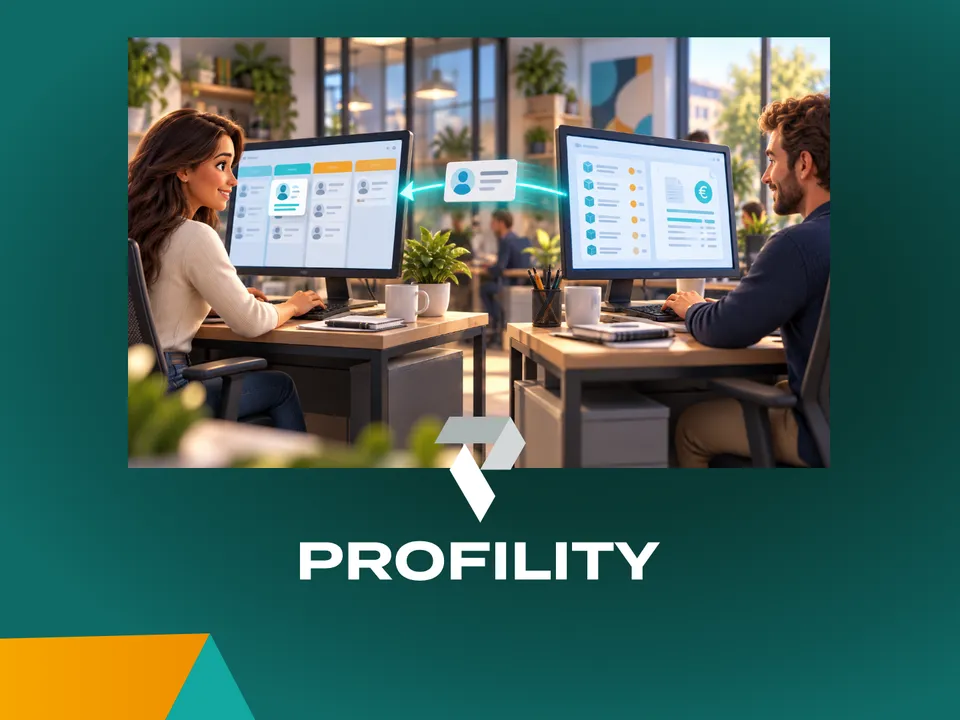
You've been working in an ERP like Business Central for years. Adding a CRM sounds like a second system where you keep track of everything twice. It doesn't have to be: agree on which system manages each piece of data, and each system does its own part.

AI IN PRACTICE
Beyond digitization: working with an AI assistant on top of your business Applications
A customer email comes in. Five minutes later, the project is set up in Connect, our in-house application, and colleagues can log hours on it. Add the tasks in Jira and it takes fifteen minutes. Meanwhile, I was drinking my coffee. That's how we've been working at Profility for a year now. This is the step after digitization.

AI IN PRACTICE
Every application you commission today needs an MCP
If you're having an application built today, whether fully custom or on the Power Platform, there's one question many clients still don't ask: does it have an MCP? Without one, an AI agent can't work for you inside that application. If you want to build for the future, it's non-negotiable.